
Why Does My Cat Purr and Ask for Pets, Then Suddenly Bite Me?
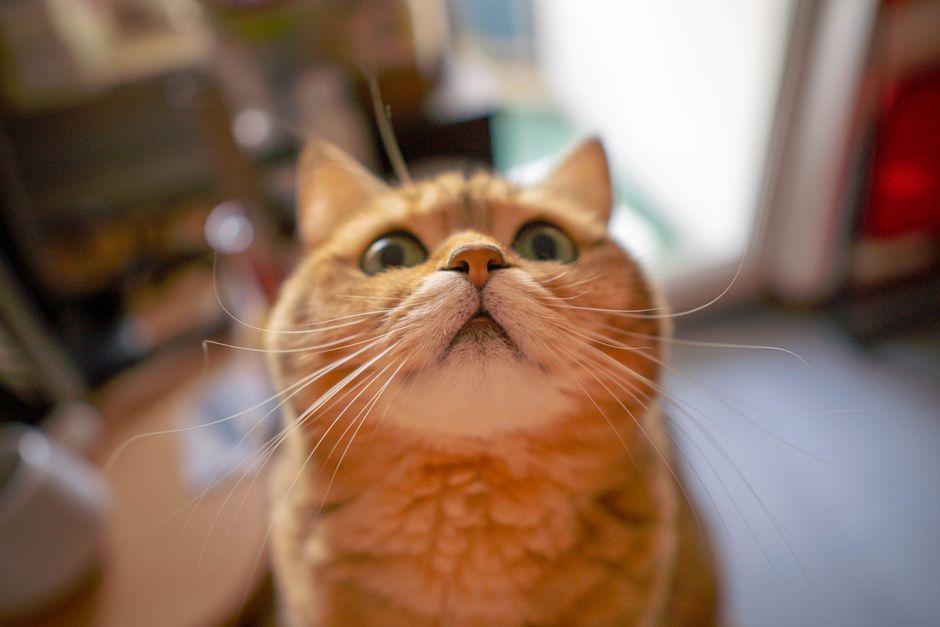
A cat can purr, seek contact, and then bite because petting-induced aggression occurs when touch stops feeling pleasant or the cat wants control over when the interaction ends. The reliable prevention method is not to endure the warning signs: use brief, consent-based contact, pause often, and stop immediately when the cat stiffens, flicks its tail, turns its ears back, or moves away.
Why does my cat purr and ask for pets, then suddenly bite me?
The apparent contradiction is real: a cat can enjoy the beginning of an interaction and reject its continuation. Cornell Feline Health Center describes petting-induced aggression as sudden aggression during petting and identifies overstimulation and an attempt to control when petting ends as possible explanations.
Purring is therefore not a standing contract for unlimited touch. The relevant question is narrower: is the cat still choosing this interaction now? VCA Animal Hospitals explains that a cat may initially enjoy stroking but bite when the physical sensation is no longer pleasant. A bite is often the final, conspicuous signal in a sequence that started earlier.
Do not treat every bite as the same problem. Fear, anxiety, restraint, sudden noises, unfamiliar odors, and redirected aggression can also trigger biting, according to VCA Animal Hospitals. Pain is another distinct possibility, particularly when the reaction is concentrated on one place. The research provided here does not establish a home diagnostic test for separating play biting from petting-induced aggression; context and the cat's body language matter more than a label.
The useful conclusion is blunt: once a cat is communicating discomfort, more petting is not affection. It is pressure.
How can I tell my cat is overstimulated before they bite?
You can often tell a cat is overstimulated by watching for a change from loose, voluntary contact to tension, withdrawal, or heightened alertness before the bite occurs.
Cornell identifies dilated pupils, tail lashing, and ears moved backward as warning signs before petting-induced aggression. International Cat Care adds other visible signals: moving away, freezing, turning toward the hand, rotated or flattened ears, tail swishing, skin rippling, nose licking, and abrupt grooming. None of these signs requires a debate at close range. They require a pause.
| What you observe | What it means for the interaction | What to do |
|---|---|---|
| Tail flicking, swishing, or lashing | The cat is no longer comfortably settled | Lift your hand away and give the cat space |
| Ears turning back or flattening | Discomfort or escalating arousal is present | Stop petting rather than changing pressure or location |
| Freezing, tense posture, or turning toward your hand | The cat is preparing to control the interaction | End contact calmly and avoid restraint |
| Dilated pupils or rippling skin | Heightened sensitivity may be occurring | Stop contact; note whether it recurs in one area |
The table is a decision rule, not a scorecard. You do not need several signals before stopping. One clear withdrawal signal is enough, because the goal is to end contact before the cat has to escalate from body language to teeth or claws.
Which body-language signs mean I should stop petting my cat?
You should stop petting when your cat moves away, freezes, tenses, pulls the ears back, flicks or lashes the tail, turns toward your hand, or shows dilated pupils.
These signals are especially easy to miss when a cat remains beside you or continues purring. Proximity and purring can coexist with a growing objection to the sensation of continued stroking. VCA specifically advises stopping immediately if a cat freezes, moves away, pulls its ears back, tenses its body, or flicks its tail.
Location matters as much as duration. International Cat Care recommends gently touching the cheeks, chin, or head for about three seconds, then pausing to see whether the cat requests more. Many cats are less comfortable with body or tail touching, and the organization recommends avoiding the legs, belly, and base of the tail.
This creates a simple operating principle: offer contact; do not impose a session. If the cat leans in or otherwise requests more after the pause, continue for another brief interval. If not, stop. The cat has supplied the information needed.
How can I prevent petting-induced aggression?
Prevention rests on keeping each interaction below the cat's tolerance limit, not on trying to pet through that limit. Start with the head, cheeks, or chin; use the three-second pause recommended by International Cat Care; and let the cat reinitiate contact after each pause.
Over several calm interactions, observe which touch zones the cat seeks and which conditions end the interaction: a longer stroke, contact near the tail, being held in place, or an environmental interruption. The point is not to calculate a universal tolerance threshold. The sources do not provide one, because cats differ. The point is to identify this cat's pattern and stop earlier next time.
Do not punish the bite. Cornell states, "Any type of physical punishment can increase a cat's fear or anxiety and worsen aggression." VCA reaches the same practical conclusion: punishment creates fear. If skin is punctured, VCA notes that cat bites can become infected; attend to the wound and seek appropriate medical care rather than restarting the interaction.
If a behavior change is new, or if aggression is centered on a particular body area, shift from behavior management to medical assessment. Cornell lists hyperthyroidism, osteoarthritis, dental disease, and central nervous system problems among conditions that can cause aggression. For households weighing access to care, Once Coupon also explains where to find free or low-cost veterinary care.
Localized sensitivity on the back, particularly just in front of the tail, deserves particular attention. Cornell's discussion of feline hyperesthesia describes extreme skin sensitivity that can lead a cat to react aggressively or bite when petted there; it also stresses that other possible causes must be ruled out before that diagnosis is made.
Frequently Asked Questions
Why does my cat bite only when I touch a certain area?
Biting that is focused on one area can indicate pain rather than a general dislike of petting. VCA Animal Hospitals identifies problems involving the ears, teeth, gums, joints, limbs, neck, back, or skin as possible causes. Avoid repeatedly testing the sensitive spot and arrange a veterinary assessment, especially when this reaction is new.
Should I punish my cat for biting during petting?
No. Cornell Feline Health Center states that physical punishment can increase fear or anxiety and worsen aggression, while VCA Animal Hospitals warns that punishment creates fear. End the interaction calmly, give the cat space, and change the next interaction by stopping earlier.
When does sudden aggression while being petted need a vet visit?
A veterinary visit is warranted when aggression is new, is concentrated on one body area, or appears alongside changes in jumping, walking, grooming, appetite, litter-box use, sleep, or tolerance of handling. Cats often mask pain, according to VCA Animal Hospitals, so a behavioral change can be an early clue worth reporting.