
What Do Tummy Tuck Scars After 2 Years Pictures Show?
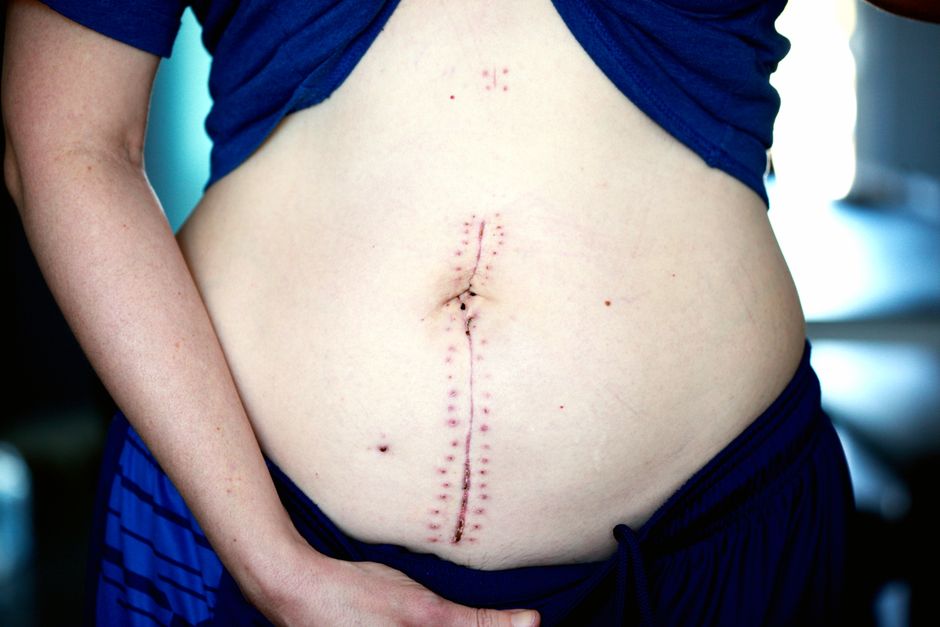
Tummy tuck scars after 2 years pictures can show a thin, pale line or a scar that remains darker, wider, raised, or uneven; both appearance and placement vary. Scars are permanent, and another patient’s photo cannot predict your result. Compare photos only when procedure type, time since surgery, view, and lighting are similar, and ask your plastic surgeon about a persistent concern or a new change.
How do tummy-tuck scars look two years after surgery, and what do real photos show?
Two years after a tummy tuck, a scar may look relatively subtle or remain noticeable; available photo galleries demonstrate variation but cannot establish what every scar looks like at that point. The American Society of Plastic Surgeons (ASPS) tummy-tuck gallery provides procedure-specific examples associated with plastic surgeons. However, gallery images alone may not state the exact procedure, follow-up timing, or lighting conditions.
Placement matters as much as color. A standard tummy tuck commonly involves a lower abdominal incision, while a vertical-incision approach creates a different scar pattern; do not compare those as though the operations were identical. A previous abdominal incision, such as a C-section scar, may be incorporated into a new scar, according to ASPS guidance on tummy-tuck results.
Use a practical photo check rather than asking whether another person’s result looks “better”:
- Color: Is the scar pale, pink, red, or darker than the surrounding skin?
- Width and texture: Does it look flat and narrow, or raised, rough, or widened?
- Placement: Is the incision in a similar location and shape, and does it sit above typical underwear or swimwear?
- Comparison conditions: Do the images show similar views, lighting, procedure type, and time since surgery?
If the gallery does not label timing or details, treat it as an illustration of possible variation—not as a two-year benchmark.
Do tummy-tuck scars ever completely disappear?
No. A surgical scar is permanent, though it may become less noticeable over time. ASPS explains that scar appearance can be affected by healing, pigmentation, tension, sun exposure, and other factors; its article states that treatments may make scars less noticeable but cannot truly remove them.
Time estimates differ by source and what they describe. ASPS says a tummy-tuck scar may take several months to a year to fade as much as it will. Another ASPS article notes that some scars can take up to 18 months to fully heal, while a peer-reviewed wound study describes scar maturation as lasting at least a year. Those statements describe healing and maturation, not a guarantee that every scar reaches the same appearance on a fixed date.
The International Wound Journal study followed scars for 12 months and combined abdominoplasty patients with people undergoing mastectomy and TRAM-flap reconstruction. Its findings therefore do not establish a typical two-year outcome for tummy-tuck scars. The useful takeaway is limited but clear: scar maturation takes time, and that study cannot answer what any individual scar will look like years later.
Why is my scar still dark, raised, wide, or uneven after two years?
A scar may remain dark, raised, wide, or uneven because scar outcomes depend on several interacting factors—not simply elapsed time. ASPS identifies genetics, skin tone, sun exposure, wound healing, tension, sutures, infection, nutrition, and postsurgical scar treatment as influences on appearance. MedlinePlus also notes that visibility varies with wound size, depth, location, age, and skin characteristics such as pigmentation.
Color needs context. Darkening can reflect increased pigmentation or a mismatch with nearby skin, while persistent redness may relate to ongoing inflammation; a photograph cannot reliably distinguish these causes. A raised or widened line can also reflect the healing process and mechanical tension. The peer-reviewed wound study lists factors including age, ethnicity, genetic predisposition, wound size and depth, anatomical location, and tension, but its 12-month follow-up does not establish long-term outcomes.
Incision technique changes the comparison, too. A lower horizontal scar and a vertical component are not equivalent patterns, and a previous incision may affect where the surgeon places or incorporates the new line. Ask the operating surgeon to identify your procedure and incision pattern before comparing your result with gallery photos.
For a review, describe what changed and when, and bring dated photos taken in similar lighting and position. That gives the clinician a clearer comparison than a single image without context.
Can tummy-tuck scars continue to fade after the two-year mark?
Scars can shrink and become less noticeable as they age, according to MedlinePlus Scar Revision, but the provided sources do not establish a predictable fading schedule after two years. ASPS describes fading over several months to a year and says some scars may take longer to fully heal; that does not rule out later changes, nor does it promise them.
Separate an elective appearance discussion from a healing concern. If a mature scar remains bothersome, a clinician can discuss whether revision is appropriate and when; MedlinePlus notes that timing is not the same for every scar. Options can include careful re-closure, pressure therapy, dermabrasion, microneedling, laser treatment, or steroid injection, each with considerations such as recurrence or wound reopening. No photo alone can determine which option fits.
For possible infection, contact the surgeon promptly. MedlinePlus lists pus or other drainage, a bad smell, fever or chills, warmth, redness, and tenderness or pain as signs to report. It says most surgical wound infections appear within 30 days of surgery, but signs of infection warrant contacting the surgeon rather than relying on the usual timing or a photo comparison.
Frequently Asked Questions
What should I look for when comparing my scar with before-and-after pictures?
Check whether the photos show the same procedure type and a similar time since surgery, and compare similar views and lighting. Then assess color, width, texture, incision placement, and whether the scar sits above typical underwear or swimwear. ASPS gallery images may not identify all of those details, so a visual match is not a prediction.
When should I ask my plastic surgeon about scar revision or an unusual scar change?
Discuss a scar that remains thickened, extends beyond the original wound, distorts nearby features, or affects movement or function; revision timing varies. Contact the surgeon about infection signs such as drainage, bad smell, fever or chills, warmth, redness, or increasing tenderness or pain. A new or marked change also merits clinical assessment rather than a judgment based only on photos.
What happens to a tummy-tuck scar 10 or 20 years later?
The sources establish that scars are permanent and can shrink or become less noticeable as they age, but they do not provide specific tummy-tuck photo data at 10 or 20 years. Individual long-term appearance cannot be predicted from another person’s pictures. A clinician can assess a scar that changes or causes a concern.
Sources
- American Society of Plastic Surgeons — Tummy Tuck Results
- American Society of Plastic Surgeons — Tummy Tuck Before and After Photos
- American Society of Plastic Surgeons — Understanding Scar Discoloration After Plastic Surgery
- International Wound Journal — An intra-individual surgical wound comparison following abdominoplasty
- MedlinePlus — Scar Revision
- MedlinePlus — Surgical Wound Infection: Treatment
Disclaimer: This article is for general information only and is not medical advice. It is not a substitute for diagnosis or treatment by a qualified healthcare professional. Always speak to your doctor before acting on anything you read here.

What Happens After You Apply to the YouTube Partner Program?
A clear guide to YouTube Partner Program review timing, channel checks, rejection reasons, appeals, and reapplication waits.

What Causes Myasthenia Gravis and Why Does the Thymus Matter?
An evidence-based explanation of autoimmune MG, genetic susceptibility, possible triggers, and the thymus connection.

Can I Get Pluvicto Before Chemotherapy for Advanced Prostate Cancer?
A patient-focused guide to who may qualify for Pluvicto before taxane chemotherapy and what PSMA PET testing means.

Should I Do a Gut or Colon Cleanse for Bloating or Constipation?
Evidence-based guidance on gut and colon cleanses, safer approaches to bloating or constipation, and symptoms that need medical care.