
Are Vitamin and Herbal Supplements Worth Trying for Erectile Dysfunction?
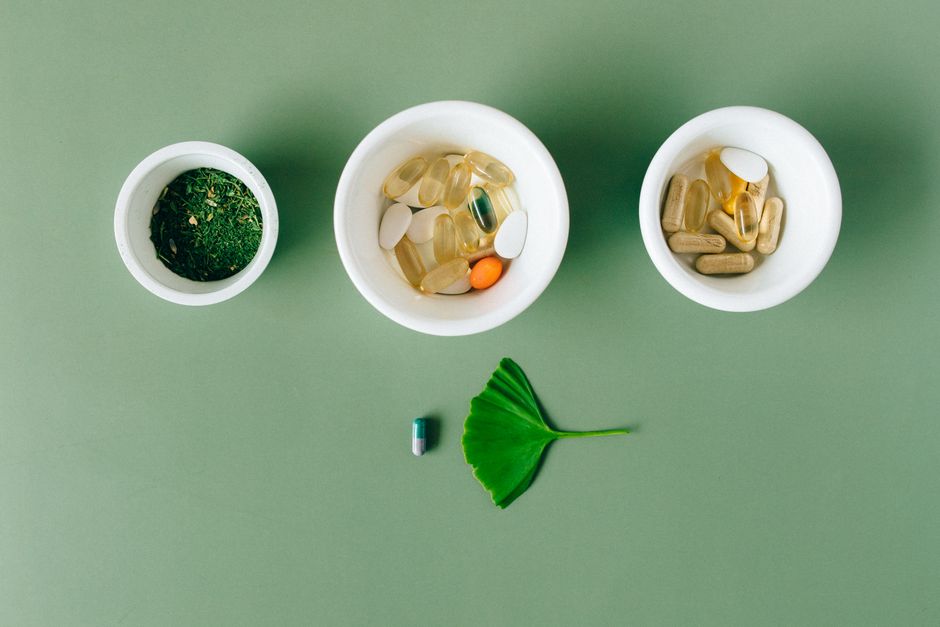
Vitamin and herbal supplements are not a reliable first-line treatment for erectile dysfunction. L-arginine has limited evidence of benefit, while vitamin D and ginseng do not have strong evidence that they meaningfully improve erections. The safer move is to identify the cause of ED with a clinician before trying a product, especially because supplement interactions and hidden-drug contamination can create real risks.
Can vitamin D help erectile dysfunction?
Vitamin D can matter when a clinician identifies a deficiency, but it has not been established as an ED treatment. That distinction is the whole job: correcting a measured health issue is not the same thing as buying a supplement in hopes of improving erections.
A 2018 systematic review and meta-analysis by Wei and colleagues found that people without ED had higher pooled vitamin D levels than people with ED, but the association was no longer statistically significant after one large study was excluded. The review concluded that the evidence did not show a strong relationship between vitamin D and ED risk. In plain terms: an association is not a treatment result.
Use the cause-first test. ED can have vascular, hormonal, neurologic, medication-related, and psychological causes, according to the European Association of Urology guidelines. Those guidelines also associate ED with diabetes, hypertension, cardiovascular disease, obesity, smoking, and physical inactivity. Vitamin D does not replace an evaluation of those possibilities.
A useful sentence for a clinical visit is: “Could a deficiency or another underlying factor be contributing, and which tests would clarify that?” It moves the conversation from a product decision to an evidence decision.
Does L-arginine actually work for ED?
L-arginine has evidence of a possible benefit for some adults with mild-to-moderate ED, but the result is limited rather than decisive. The supplement is not a substitute for finding the cause of ED, and it is not a blank check for combining products.
A 2019 systematic review and meta-analysis by Rhim and colleagues reviewed 10 randomized controlled trials involving 540 people. Across studies using varying amounts and durations, the analysis found better ED outcomes with arginine than with placebo or no treatment; adverse effects were also reported more often among arginine users than placebo users, though none reported in that review were severe.
The important comparison is not “some benefit” versus “no benefit.” It is measurable benefit versus meaningful benefit. The EAU guideline cites a meta-analysis showing improvement on an erectile-function score with L-arginine, yet describes the observed L-arginine and antioxidant benefit as small and potentially not clinically meaningful to patients. A score can move while a reader's real-world concern remains unresolved.
There is another constraint. The National Institute of Diabetes and Digestive and Kidney Diseases says medicines and supplements can affect how other medicines work, with interactions capable of causing serious side effects or other problems. That makes a medication review part of the decision, not a footnote after the purchase.
Which natural supplements have evidence for better erections?
Among commonly marketed natural options, L-arginine has the clearest but still limited evidence; ginseng has low-certainty evidence of only trivial effects; and vitamin D has not shown a strong treatment relationship. The broader category is far stronger at marketing than at proving a dependable outcome.
| Option | What the evidence supports | What that means in practice |
|---|---|---|
| Vitamin D | The 2018 Wei review did not establish a strong relationship between vitamin D and ED risk. | Consider deficiency assessment as part of broader care, not vitamin D as a proven ED treatment. |
| L-arginine | The 2019 Rhim review found benefit across included trials, while EAU characterizes the observed benefit as small and potentially not meaningful. | Evidence exists, but it does not answer whether it fits a person's cause of ED or medication list. |
| Ginseng | The 2021 Cochrane review by Lee and colleagues concluded that ginseng appears to have a trivial effect compared with placebo. | Do not confuse “natural” with a clinically worthwhile result. |
The EAU guideline puts the wider market problem plainly: medicinal herbs and natural supplements for ED have grown rapidly despite very little robust evidence supporting effectiveness and safety. That is why “herbal blend” is not a useful evidence category. It hides the question that matters: which ingredient, tested against what, with what outcome, and with what safety data?
Be especially careful with products promoted as fast sexual enhancement. The FDA says many sexual-enhancement products are likely contaminated with dangerous hidden ingredients and may be sold online or in stores as supplements, foods, or all-natural treatments. FDA also states that its public list covers only a small fraction of contaminated products; absence from the list is not a safety signal.
For a fuller safety screen, see Are Over-the-Counter Erection Supplements Safe or Effective?. The product label is not the finish line. The ingredient list, medication list, and underlying ED cause all belong in the same conversation.
What is the safer next step before buying a supplement?
The safer next step is an ED assessment and a complete medication-and-supplement review. NIDDK explains that clinicians use medical, sexual, and mental-health history, a physical examination, and laboratory or other tests when needed to diagnose ED. That process can examine blood-vessel, nervous-system, hormonal, and structural factors instead of forcing every problem through the supplement aisle.
Use a one-page conversation brief before the appointment. Its purpose is to lower the clinician's cognitive load and make the supplement question answerable.
- List every product. Include prescriptions, over-the-counter medicines, vitamins, and supplements. NIDDK says clinicians ask about these during ED history-taking.
- State the decision clearly. Say: “I am considering a supplement for ED. Can we review whether an underlying cause or an interaction changes the risk?”
- Ask what the evaluation is trying to rule in or out. NIDDK notes that blood tests and other tests can be used when needed.
- Ask for the proven options. NIDDK notes that clinicians aim to treat the underlying cause when possible and describes oral PDE5 inhibitors as medicines that improve penile blood flow and may help a person get and keep an erection.
This is not a delay tactic. It is how a vague purchase decision becomes a targeted health decision. This week, write the one-page brief before shopping for any ED supplement.
Frequently Asked Questions
Can I take L-arginine with Viagra or Cialis?
The provided sources do not establish that combining L-arginine with Viagra or Cialis is safe. NIDDK warns that medicines and supplements can change how other medicines work and that interactions can cause serious side effects or other problems. A clinician or pharmacist needs the full medication and supplement list to assess a particular combination.
Are male enhancement supplements safe?
Not automatically. FDA warns that many products marketed for sexual enhancement are likely to contain dangerous hidden ingredients, including products presented as dietary supplements or all-natural treatments. FDA also says a product's absence from its notification database does not show that it is safe.
When should erectile dysfunction be checked by a doctor instead of treated with supplements?
ED warrants clinical assessment before supplement treatment when the cause is unknown, because it can involve vascular, hormonal, neurologic, medication-related, or psychological factors. NIDDK describes an evaluation that can include medical, sexual, and mental-health history, a physical examination, and laboratory or other tests when needed. The practical starting point is to bring every prescription, over-the-counter medicine, vitamin, and supplement to that conversation.
Sources
- European Association of Urology Guidelines on Sexual and Reproductive Health
- National Institute of Diabetes and Digestive and Kidney Diseases: Erectile Dysfunction Treatment
- National Institute of Diabetes and Digestive and Kidney Diseases: Erectile Dysfunction Diagnosis
- U.S. Food and Drug Administration: Sexual Enhancement and Energy Product Notifications
- Rhim et al., Journal of Sexual Medicine
- Lee et al., World Journal of Men's Health
- Wei et al., Andrologia
Disclaimer: This article is for general information only and is not medical advice. It is not a substitute for diagnosis or treatment by a qualified healthcare professional. Always speak to your doctor before acting on anything you read here.