
Can Vitamins, Herbs, and Greens Powders Interfere With Chemotherapy?
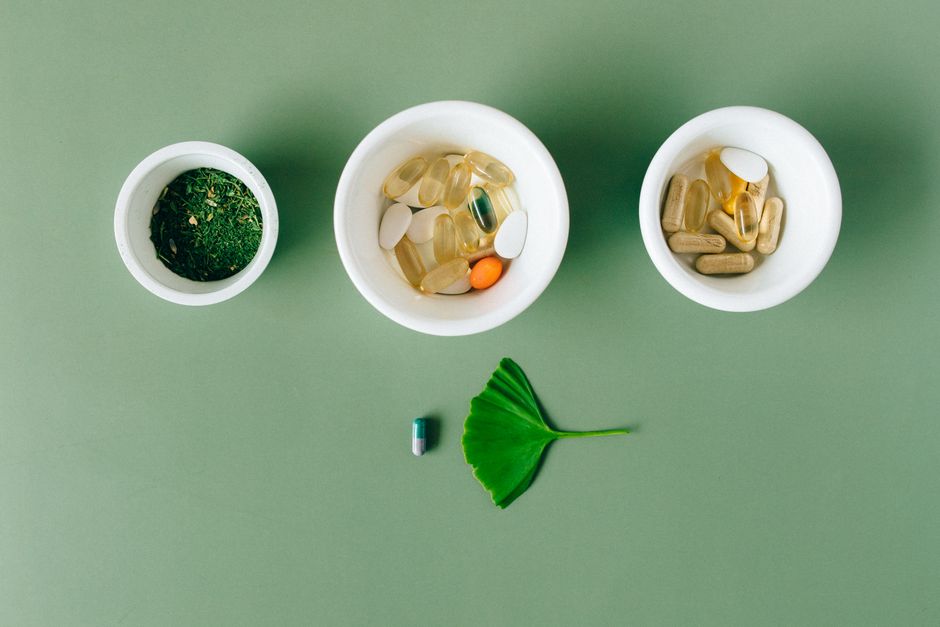
Yes. Vitamins, herbs, greens powders, special teas, and other supplements can change how chemotherapy works, so the safe default is to give your oncology team a complete product list before using them. Food and a clinician-approved standard multivitamin are different from concentrated extracts, but neither label nor “natural” claims settle the interaction question.
This is a medication-review problem, not a willpower test. The National Cancer Institute explains that supplements, herbs, and other complementary products can change how an anticancer drug is absorbed, metabolized, distributed, or excreted. The label may look simple. The treatment plan is not.
Can I keep taking my multivitamin during chemotherapy?
Possibly, but only after the oncology team reviews the exact product and why it is being used. A multivitamin is not automatically in the same category as a high-dose single nutrient, an antioxidant blend, or a greens powder with added botanical extracts.
The American Cancer Society says people can most often get needed vitamins and minerals through a healthy diet. When treatment side effects make balanced eating difficult for an extended period, a clinician or registered dietitian may recommend a daily multivitamin/mineral product and check nutrient levels with blood work. If a vitamin is approved, the organization advises choosing one with no more than the full Daily Value.
That distinction matters because “multivitamin” is a label, not a verdict. In the 2019 SWOG S0221 prospective study of people receiving a specific breast-cancer chemotherapy regimen, multivitamin use was not associated with survival outcomes. That result does not prove every multivitamin is safe for every regimen. It does show why the useful question is not “Are supplements good or bad?” It is “What is in this product, and does it fit this treatment plan?”
| Product type | What changes the review | What to bring to the oncology pharmacist |
|---|---|---|
| Food and ordinary cooking ingredients | Food use can differ from concentrated supplementation. | The food or drink name and how it is normally used. |
| Multivitamin/mineral product | Ingredient amounts, added botanicals, and whether a clinician recommended it. | The bottle or a clear label photo. |
| Greens powder or blend | Multiple ingredients can include vitamins, antioxidants, herbs, and extracts. | The full ingredient panel, not just the front label. |
| Single vitamin, herb, tea, capsule, gummy, or extract | Concentrated products can affect treatment or other medicines. | The exact product name, form, and reason for use. |
The label-list drill: put prescription medicines, over-the-counter medicines, powders, teas, gummies, capsules, and herbal formulas in one list. “I only use it occasionally” still belongs on it. Memorial Sloan Kettering notes that herbal formulas may combine many herbs at varying amounts, which raises the cognitive load for everyone trying to identify an interaction.
Do vitamin C and vitamin E interfere with chemo?
They can be a concern during chemotherapy, particularly when taken as antioxidant supplements rather than obtained through food. The National Cancer Institute lists vitamin C and vitamin E among dietary antioxidants and states that these products can alter how anticancer drugs work in the body.
The concern is not merely theoretical. The NCI reports that breast-cancer studies found antioxidant supplement use during chemotherapy and radiation was associated with a greater risk of death and a lower likelihood of remaining cancer-free, while also stating that more research is needed. The right reading is caution, not a self-directed rule to stop prescribed care.
The 2019 SWOG S0221 prospective study adds useful context. It followed people with breast cancer receiving cyclophosphamide, doxorubicin, and paclitaxel; antioxidant supplements in that study included vitamins A, C, and E, carotenoids, and coenzyme Q10. Their use before and during treatment was associated with higher recurrence and death hazards, though those estimates were not statistically significant.
Weak question: “Is vitamin C healthy?” Better question: “Does this vitamin C product, in this form, fit my current chemotherapy regimen?” The first question is about a nutrient in the abstract. The second gives the oncology team the information needed to review an actual treatment interaction.
Food is the cleaner baseline. The American Cancer Society says fruits and vegetables are the best way to obtain antioxidants and that antioxidant supplements are often not recommended during cancer treatment. That is not a promise that any particular food solves a treatment side effect. It is a practical way to avoid treating a concentrated supplement as interchangeable with ordinary eating.
Are turmeric, curcumin, or green tea supplements safe during treatment?
Do not treat turmeric, curcumin, or green tea supplements as automatically safe during treatment; concentrated products need regimen-specific review. Memorial Sloan Kettering states that turmeric in food and tea is generally safe, while tablets, capsules, and gummies are stronger forms that should be discussed with clinicians.
The word “natural” does not reduce the stakes. Memorial Sloan Kettering’s turmeric guidance notes laboratory findings in which turmeric stopped some chemotherapy medicines from working against breast-cancer cells and specifically warns that it may lessen the effects of several chemotherapy drugs. It also describes a breast-cancer study in which turmeric produced small pharmacokinetic changes judged clinically irrelevant. That contrast is the point: the answer can change with the regimen and the product.
Green tea creates a similar split between a beverage and a supplement. The NCI says green-tea catechins are antioxidants, reports rare liver damage from green-tea extract, and says research has not established whether green tea is safe or effective when combined with anticancer drugs. A tea bag, a bottled drink, and an extract capsule should not be collapsed into one casual “green tea” answer.
For herbal remedies and dietary supplements, Memorial Sloan Kettering advises stopping them a week before starting chemotherapy, radiation therapy, surgery, or certain procedures unless the care team directs otherwise. The affirmative replacement behavior is simple: bring the product list early, then follow the restart guidance from the team that knows the treatment plan.
Make the review easy for the person checking it
The oncology pharmacist does not need a polished explanation. They need an accurate inventory. Bring the containers when possible, or bring photos of the front and Supplement Facts panels. Include products taken for sleep, energy, digestion, immunity, stress, workouts, or “general wellness.” Those are still part of the medication picture.
- Name the product: brand, product name, and form, such as powder, tea, capsule, gummy, or liquid extract.
- Show every ingredient: do not summarize a blend as “just greens” or “just vitamins.”
- State the purpose: for example, appetite, fatigue, constipation, or a previously diagnosed deficiency.
- State the treatment context: current chemotherapy, radiation, procedure, and every prescription or nonprescription medicine.
- Ask for the replacement plan: “Should this remain off treatment, and what should I use or do instead if the original problem continues?”
A diagnosed deficiency changes the conversation. It does not end it. In SWOG S0221, vitamin B12 and iron had concerning observational associations, but the study does not establish that the supplements caused those outcomes and does not override treatment for a diagnosed deficiency. The useful next move is to give the team the lab-based reason for the supplement, not to make a unilateral change.
Run the label-list drill before the next oncology visit. Put every nonprescription product in one place, photograph each label, and ask one direct question: “Which of these fit my treatment plan right now, and what is the plan for the ones that do not?”
Frequently Asked Questions
Should I stop iron or vitamin B12 while receiving chemotherapy?
Do not make that call from a general supplement rule. In the 2019 SWOG S0221 observational study, vitamin B12 use before and during chemotherapy was associated with poorer survival outcomes, and iron use during chemotherapy was associated with recurrence; these associations do not prove either supplement caused the outcomes. A diagnosed deficiency or clinician-directed treatment changes the decision, so the oncology team needs the reason, product, and timing before anything is stopped or continued.
Why does my oncology team need the full list of supplements I take?
A complete list lets the team identify products that could change drug absorption, metabolism, distribution, or removal. The National Cancer Institute explains that supplements can disrupt cytochrome P450 enzymes or P-glycoprotein, which can keep an anticancer drug from working as intended. Combination formulas make this harder because they can contain multiple herbs at varying amounts.
Are food-based vitamins safer than concentrated supplements during chemo?
Food and concentrated products are not the same exposure. The American Cancer Society says antioxidants are best obtained through fruits and vegetables, while antioxidant supplements are often not recommended during cancer treatment. Memorial Sloan Kettering similarly distinguishes turmeric used in food or tea from stronger tablets, capsules, and gummies that require clinician discussion.
Sources
- National Cancer Institute: Cancer Therapy Interactions With Foods and Dietary Supplements
- Journal of Clinical Oncology: SWOG S0221 prospective study
- Memorial Sloan Kettering Cancer Center: Herbal Remedies and Cancer Treatment
- Memorial Sloan Kettering Cancer Center: Turmeric
- American Cancer Society: Benefits of Good Nutrition During Cancer Treatment
Disclaimer: This article is for general information only and is not medical advice. It is not a substitute for diagnosis or treatment by a qualified healthcare professional. Always speak to your doctor before acting on anything you read here.